The frame that turns
a yard into a room.
MintScapes designs and builds custom pergolas across NYC, North Jersey, Westchester, and Fairfield County — cedar, IPE, powder-coated steel, and louvered aluminum systems. Sized to the space, loaded for the exposure, lit from the inside.
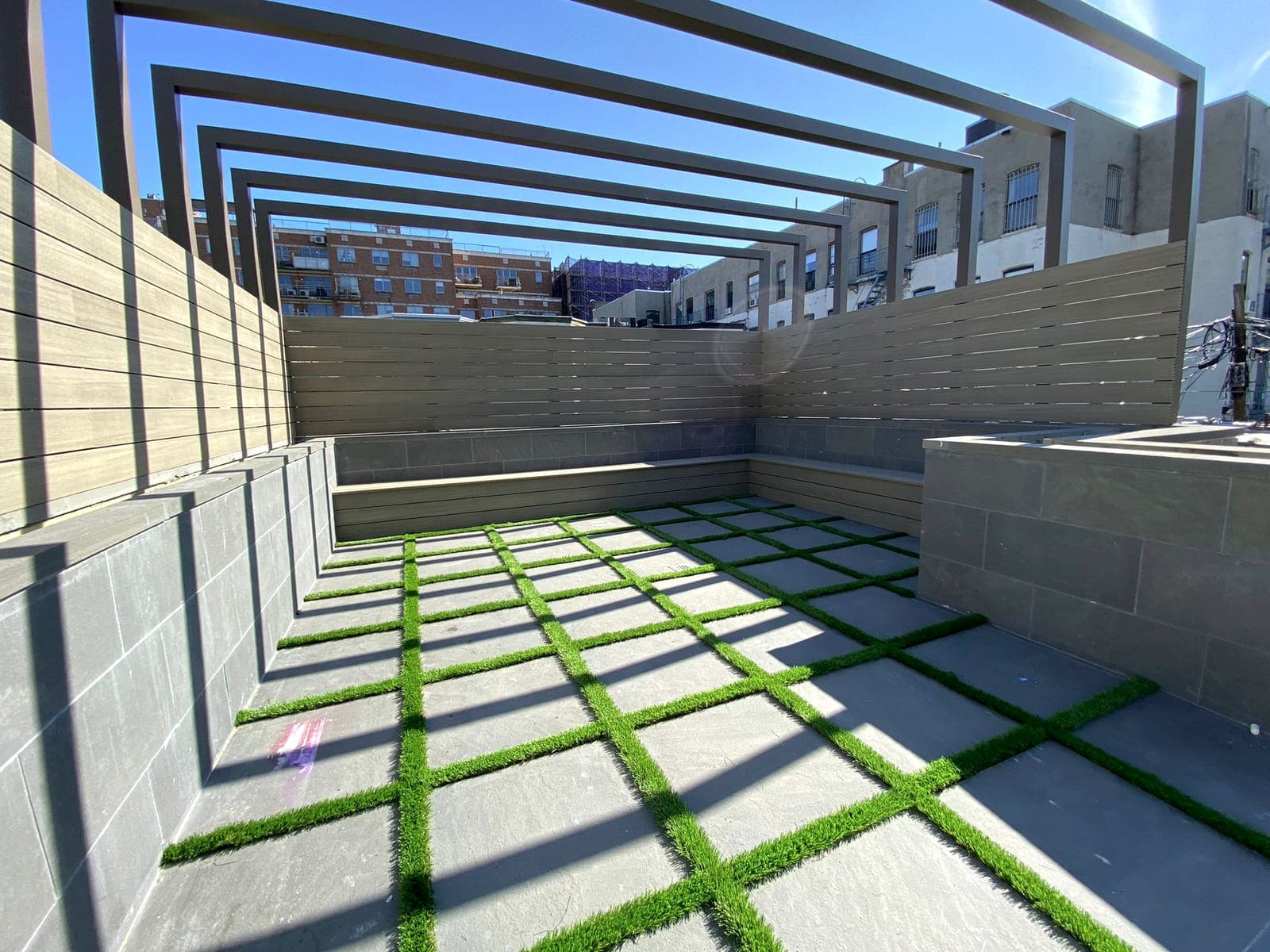
A pergola does one simple thing: it gives an outdoor space a ceiling. That ceiling can be symbolic (an open frame of beams) or functional (louvers that close against a downpour), but the effect is the same — it defines the room. Before the pergola goes up, the space is a patio. After, it’s a place you eat dinner.
Most of our pergolas land between 100 and 300 square feet of footprint. The choice of material is usually driven by three things: the exposure (rooftop wind vs. backyard sheltered), the visual register (rustic cedar vs. modern steel), and the budget. We’ll walk you through all four material families at the walk-through and tell you which one your space actually wants.
Each one is right somewhere.
Cedar
Warm, light, the classic backyard pergola. Western red cedar is the workhorse — naturally weather-resistant, weathers silver, 15–25 years in NYC if detailed properly. The budget option, but in the right yard it’s also the right option.
IPE
Brazilian hardwood. Denser, darker, dimensionally stable. Heavier than cedar — affects pier sizing and roof load. Reads upmarket. 30+ year lifespan. Worth it when the rest of the yard already speaks the same language.
Powder-coated steel
Modern, sharp profiles. Handles any wind load. Doesn’t move with the seasons. We use it most on rooftops and in modern garden contexts. Specify the powder coat carefully — coastal exposure pushes the spec.
Louvered aluminum (Struxure, Stratco, Equinox)
The pragmatic luxury. Motorized louvers tilt and close on a remote or app. Adjustable shade, rain-tight when closed, integrated lighting and fans available. Roughly 2–3× the cost of a fixed steel pergola, but turns the structure from a season into all four.
Sized to the room, loaded for the place.
Proportion first. A pergola too small for the space reads as decoration. A pergola too large dominates and shrinks the room visually. We size the structure to feel inevitable — usually a foot or two larger than the dining or seating zone it covers.
Load it for the exposure.A backyard cedar pergola needs to handle its own weight plus snow. A rooftop steel pergola needs to handle uplift in a 60 mph gust. We design the substructure to the worst case, not the average, and have your building’s engineer sign off on rooftop installs.
Wire it before you build it.Pergolas earn their cost when they’re used after dark and in August. Lighting on a dimmer, outdoor ceiling fan, sometimes a heater, all fed by conduit run inside the structure before assembly. Adding any of this later is hand-fishing in places it shouldn’t go.
What clients ask first.
- What does a custom pergola cost?
- A cedar pergola in the 10×12 to 12×16 range runs $8K–$18K installed. IPE pergolas of the same scale run $15K–$30K. Powder-coated steel pergolas land between $20K and $45K. Louvered aluminum systems with motorized blades (Struxure, Stratco, Equinox) start around $25K and climb past $70K depending on size and integration.
- Cedar, IPE, steel, or louvered aluminum — which one?
- Cedar is the budget classic — beautiful, weathers silver, lifespan of 15–25 years in NYC. IPE is the upgrade — warmer profile, denser, 30+ years. Powder-coated steel reads modern and handles any wind load. Louvered aluminum is the pragmatic luxury — adjustable shade you can dial in by the hour, dead simple to live with.
- Can a pergola go on a rooftop?
- Yes, and it’s where wind and weight become the design driver. Rooftop pergolas need uplift bracing, sometimes a ballast strategy, and a structural sign-off from your building’s engineer. We work within that load envelope; we don’t replace the engineer.
- Do I need a permit for a pergola?
- In NYC, most freestanding pergolas under a certain size and height don’t require a DOB permit. Larger structures, attached pergolas, anything cantilevered, or pergolas with built-in electrical do. North Jersey rules vary by town — Hoboken, Jersey City, Montclair, and Summit typically require a zoning review. We’ll tell you on the walk-through.
- Can you integrate lighting and fans?
- Yes — and you should. Pergolas earn their cost when they’re used after sundown and in August humidity. Low-voltage downlights from inside the rafters, dimmable. Outdoor-rated ceiling fans on a beam crossbar. Sometimes a heater for shoulder seasons. All wired before the structure goes up.
- How long does a pergola install take?
- Four to ten weeks from order to install, depending on material and shop lead time. Cedar and IPE are usually 4–6 weeks. Powder-coated steel and louvered aluminum systems run 8–14 weeks on lead time. Install itself is 2–5 days on-site for most residential pergolas.